A new approach to preventing future pandemics
Viruses evolve continuously. Our treatments do not.
For decades, antiviral strategies have been fundamentally reactive—updated only after viruses change. This project asks a simple but important question: what if our therapies could keep up instead of falling behind?
The idea
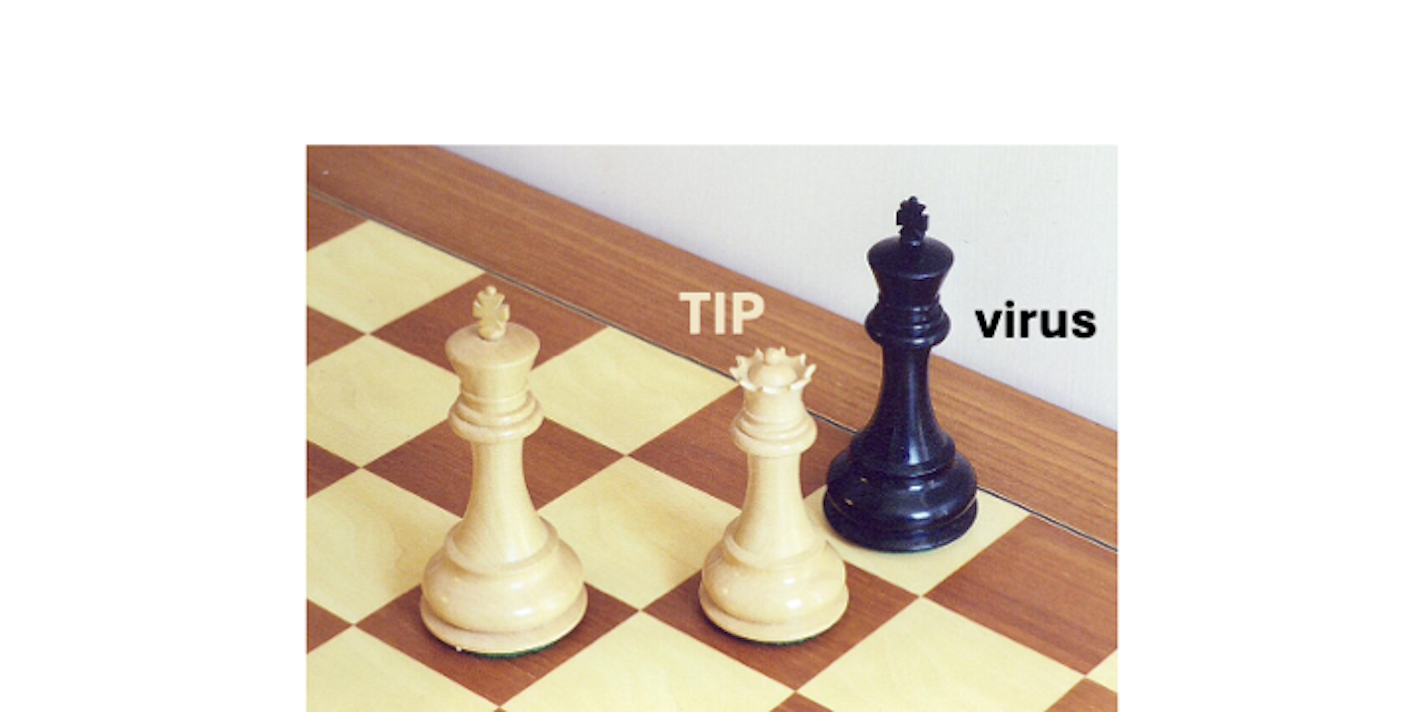
The lab of John Yin at the University of Wisconsin-Madison (yinlab.discovery.wisc.edu) is developing therapeutic interfering particles (TIPs): virus-derived genomes that can only replicate in the presence of a virus and, in doing so, suppress its growth.
Unlike conventional antivirals or vaccines, TIPs are not static. Because they replicate alongside the virus, they may also adapt as the virus evolves.
Instead of repeatedly redesigning treatments, this approach explores whether antiviral therapies can track viral evolution in real time.
Why this matters
Recent experience has made the problem clear. Viruses such as influenza and coronaviruses evolve rapidly, often eroding the effectiveness of existing interventions.
Current strategies remain powerful—but they require continual updating. Each viral change forces a response.
This project explores a different paradigm: evolution as a feature, not a liability.
If TIPs can co-evolve with viruses, they could maintain effectiveness longer and reduce the likelihood of viral escape.
What this campaign will enable
This is a focused proof-of-concept effort centered on one question: Can TIPs co-evolve with viruses in ways that constrain viral escape?
With your support, we will carry out controlled co-evolution experiments to observe how viruses and TIPs adapt together, quantify how TIPs alter viral growth and evolutionary pathways, and identify design principles for TIPs that remain effective as viruses change.
This work will also support students training at the intersection of biology, engineering, and evolution—preparing the next generation to address emerging infectious diseases.